 Home
Home
Pipe Lining & Descaling
Pipe Descaling and Rehabilitation Services for Aging Cast Iron and Steel Drain Lines
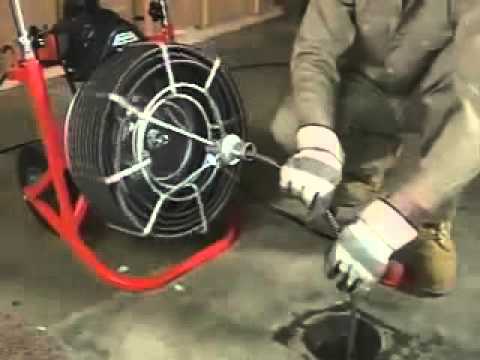
Cast iron and steel drain pipes are built to last, and in many Rhode Island and Massachusetts homes they have been lasting for 50, 60, or 70 years or more. Over that time, they accumulate a hard mineral deposit on their interior walls called scale. Scale is a combination of iron oxidation, calcium and mineral buildup from water contact, and in some cases layers of compressed grease and debris that have hardened onto the pipe wall over decades.
As scale accumulates, the effective interior diameter of the pipe progressively decreases. A four-inch cast iron pipe that has been scaling for fifty years may have an effective interior diameter of two and a half inches or less. Flow is restricted, debris catches on the rough scale surface more easily, and clogs become more frequent. Snaking clears the blockage but passes through the scale without removing it. Jetting scours the scale surface but typically cannot strip heavy buildup from the pipe wall.
Mechanical descaling with the Picote Maxi Miller removes the scale. The Miller's rotating chain flail attachments contact the pipe wall directly as they spin, breaking the scale loose and allowing it to be flushed downstream. The result is a pipe with its original interior diameter substantially restored and a smooth interior wall that resists future debris adhesion.
This is not a service most drain companies in Rhode Island or Massachusetts offer, because most do not own the equipment. Wood's Rooter operates the Picote Maxi Miller and uses it for a range of drain rehabilitation applications beyond descaling.

Before You Call Woods Rooter

After You Call Woods Rooter
Septic System FAQs
These are two separate services that address different parts of the septic system. Septic tank pumping removes the accumulated solids from the tank itself and is performed by a licensed septic pumping company. It is a routine maintenance service typically recommended every three to five years.
Leach field jetting addresses the distribution and absorption side of the system, clearing biomat from the leach lines and blockages from the distribution box to restore drainage and flow. Both may be needed when a system is in distress, but they address different components.
If your system is backing up, a camera inspection and assessment will help determine which part of the system is failing and what combination of services is appropriate.
In many cases, a leach field that appears to be failing can be restored through hydro-jetting of the leach lines and cleaning of the distribution box, without excavation or replacement. The key question is why the field is failing. A field that is failing because of biomat accumulation that has restricted the leach line perforations and the soil interface can often be restored to acceptable function through jetting.
A field that is failing because the soil has become permanently saturated or because the design capacity of the field is genuinely insufficient for the current load is a different situation, and restoration through jetting alone may provide only temporary relief. We will assess the system honestly before recommending jetting as a solution, and we will tell you clearly if we believe the field is beyond what jetting can restore.
Because chemical treatments, including marketed bacterial additives and enzymatic products, can harm the biological ecosystem that makes a septic system work. A healthy septic tank depends on naturally occurring anaerobic bacteria that digest solids and treat effluent. These bacteria establish themselves over time and are not something you can reliably supplement by adding a product through the toilet.
Chemical products introduced into the tank can disrupt or kill these bacteria, reducing the system's treatment capacity and in some cases accelerating the passage of insufficiently treated effluent to the leach field, which contributes to the very problem it is supposed to solve.
Wood's Rooter uses only mechanical and hydraulic methods on every septic system component we service, which is consistent with the approach supported by the Rhode Island DEM OWTS regulatory framework.
OWTS stands for On-Site Wastewater Treatment System. The Rhode Island Department of Environmental Management requires contractors who perform work on private septic systems to hold an OWTS license. This is a state regulatory credential, not a general plumbing or drain cleaning certification. It involves training, examination, and DEM approval specifically for on-site wastewater treatment system work.
Wood's Rooter holds OWTS RI DEM License L1734. When selecting a contractor for any septic system work in Rhode Island, confirming that they hold a current OWTS license is a meaningful step in verifying that they are qualified and authorized to perform that work.
Yes, and this is one of the clearest indicators of a septic system problem rather than a household drain issue. When an individual drain is slow, the problem is usually in that drain's line. When all drains in the house are slow simultaneously, and particularly when the problem does not resolve after snaking or jetting individual lines, the restriction is likely downstream of where the house plumbing connects to the septic system.
This points to the septic tank outlet, the distribution box, or the leach field. Call us and describe what you are experiencing and we can advise on whether a septic system assessment is the right next step.
There is no universal interval, as it depends on the age of the system, the soil conditions, the size of the leach field relative to the household's water use, and the maintenance history of the system. In general, a leach field that has never been jetted and is showing early signs of restriction (system is draining but slowly, or the yard above the field is occasionally soft) would benefit from a jetting service before the restriction progresses to a more significant failure.
Properties with older systems, heavy use, or any history of septic problems benefit from more frequent attention. We recommend calling to discuss your specific system and its history rather than applying a generic interval.
Pipe Descaling & Picote Maxi Miller FAQs
Scale is a hard deposit that accumulates on the interior walls of cast iron and steel pipes over time. It forms through a combination of iron oxidation (rust) on the pipe interior, mineral buildup from water contact (calcium and magnesium deposits from hard water), and layers of compressed organic material that have adhered to the rough pipe surface over decades.
As the scale builds, it progressively narrows the pipe's effective interior diameter and creates an increasingly rough and irregular surface that catches debris and accelerates further buildup. A four-inch cast iron pipe with heavy scale can have an effective diameter of two and a half inches or less after years of accumulation without descaling.
High-pressure jetting can remove loose scale and debris from pipe walls and is an effective first step in cleaning scaled pipes. However, heavy or long-established scale that has hardened onto the pipe wall often cannot be fully removed by jetting alone. The water pressure cleans the accessible surface but does not have the mechanical contact force needed to break dense scale free from the pipe wall.
Mechanical descaling with chain flail equipment like the Picote Maxi Miller directly contacts and breaks the scale loose, which is why it is used as a preparatory step before jetting and before pipe lining in pipes with significant buildup.
In most cases involving cast iron pipes with visible scale, yes. A CIPP liner bonds to the interior wall of the host pipe, and the quality of that bond depends on the condition of the pipe surface.
Heavy scale prevents the liner from making consistent contact with the pipe wall, creates voids beneath the liner, and reduces the liner's ability to achieve its rated structural strength and lifespan. Industry best practice for pipe lining projects on scaled cast iron is to descale before lining.
A camera inspection before the lining project is planned will show whether the scale present requires descaling as a preparatory step.
A reinstatement is the process of reopening a lateral connection that was covered by the pipe liner during CIPP installation. When a liner is installed in a main drain or sewer line, it lines the full interior of the pipe, including over the openings of any branch lines (lateral connections) that enter the main at various points. After the liner cures, those openings are covered and blocked. Fixtures connected through those laterals cannot drain into the main line until the connection is reopened from inside the lined pipe.
The Picote Maxi Miller performs reinstatements using specialized cutter attachments that are guided by a camera to each lateral opening and cut through the liner material precisely, reopening the connection without requiring excavation at each point. If you recently had a main drain or sewer line lined and fixtures connected to that line are not draining correctly, the laterals may not have been reinstated. Call us to discuss what a reinstatement visit would involve for your specific configuration.
The Picote Maxi Miller is a professional-grade electromechanical machine that rotates a flexible shaft at high speed inside a drain or sewer pipe.
Various attachments are fitted to the end of the rotating shaft depending on the application: chain flail attachments for descaling, cutting heads for root removal and concrete breaking, specialized cutters for reinstatements, and brush attachments for surface preparation before coating. The machine is used alongside a drain camera, which provides real-time visual confirmation of what the attachment is doing inside the pipe and allows the operator to assess progress as the work proceeds.
The Maxi Miller works in pipes from three to twelve inches in diameter and is suitable for cast iron, steel, PVC, clay, and concrete pipes depending on the attachment being used.
Epoxy brush coating is a pipe rehabilitation method in which a specialized two-part epoxy compound is applied to the interior wall of the pipe to rebuild the wall, seal cracks and pinhole corrosion, and restore a smooth, durable interior surface.
It is typically used on pipes that have surface deterioration and minor to moderate damage but are structurally intact enough that full CIPP lining is not required. Before brush coating is applied, the pipe interior must be thoroughly cleaned and the surface must be properly profiled to ensure the epoxy bonds uniformly.
The Picote Maxi Miller is used to prepare the pipe surface to the standard needed for a successful brush coating application. If you are considering brush coating as a rehabilitation option for aging cast iron pipes, call us to discuss whether it is appropriate for your specific pipe condition.
Yes, in many cases. Set concrete inside a drain line is a relatively uncommon but genuinely difficult problem, typically caused by construction work where grout or concrete was inadvertently introduced into the drain system. Once set, concrete cannot be removed by jetting and creates a near-complete obstruction.
The Picote Miller's cutting and chain attachments can break up and remove hardened concrete and grout from inside drain lines in many configurations, depending on the volume and location of the obstruction.
Call us to describe the situation and we will advise on whether the Miller is the appropriate tool for your specific case.
Descaling is performed from an access point (a cleanout or removed fixture) and does not require opening walls or excavating the property.
The descaling process itself generates noise from the machine and may produce vibration in the pipe, and some splatter from loosened scale can occur near the access point. The duration depends on the length of pipe being descaled and the thickness of the scale, but most residential descaling jobs are completed in a single visit.
We will give you a realistic time estimate when you call and describe the situation, and we will explain any access or preparation requirements specific to your property.
How Descaling and the Picote Miller Fit With Other Services

Camera inspection first.
Before descaling begins, a video camera inspection establishes the condition of the pipe, the extent of the scale, the presence of any structural damage, and whether the pipe is a candidate for descaling and lining or requires a different approach. Wood's Rooter performs camera inspection as a standard step before any descaling work.

Descaling.
The Picote Miller removes scale from the pipe interior, restoring interior diameter and preparing the pipe surface for the next step.

Jetting.
After descaling, the pipe is flushed with high-pressure water to remove all loosened scale and debris. A post-descaling jetting pass clears the line and prepares it for inspection.