 Home
Home
Maintenance
Proactive Drain and Sewer Maintenance in Rhode Island and Massachusetts
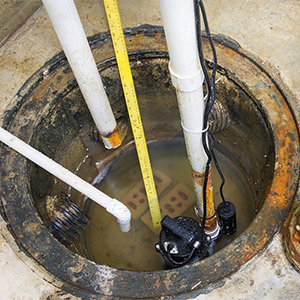
The most expensive drain call is the one you make at 8pm on a Sunday because your basement is backing up. The second most expensive is the one you make two months later when it happens again, because the underlying problem was never properly addressed.
At Wood's Rooter, we've been clearing drains and sewer lines across Rhode Island and Massachusetts since 2007. In that time, we've seen the same pattern play out hundreds of times: a problem that started as a small, manageable issue, a little root intrusion, some grease coating on the pipe wall, a slight slowdown in flow, that went unaddressed until it became an emergency. The repair cost is almost always higher than what regular maintenance would have cost. The disruption is always worse. And for commercial properties, the downtime can cost far more than the plumbing bill.
Proactive drain maintenance changes that equation entirely. By scheduling regular cleaning, inspection, and treatment of your drain and sewer lines, you stay ahead of the buildup, root growth, and gradual deterioration that leads to failures. You keep your pipes in good working condition year-round. And when something does start to develop, we catch it early, when it's still a small fix, not a major repair.
This isn't about selling you a service you don't need. It's about being honest: pipes that are maintained regularly last longer, fail less often, and cost less to keep in service over time. That's true for a single-family home in Cranston and it's equally true for a restaurant in Providence or an apartment complex in Attleboro.
Drain & Sewer Maintenance Service FAQs
It depends on your property type, pipe age, and drain usage. For most single-family homes with no unusual history, an annual drain inspection and cleaning is a reasonable baseline. If your property has mature trees near the sewer line, a history of root intrusion, or older clay or cast iron pipes, more frequent attention, every six months, is worth the investment. Commercial kitchens and restaurants typically need quarterly or biannual drain jetting to manage grease buildup. Properties with grease traps have their own regulatory cleaning requirements. When you call us, we'll ask the right questions and recommend an interval that actually makes sense for your situation, not the one that maximizes our visit frequency.
No. Woods Rooter works with homeowners and businesses on flexible terms. Some clients prefer a formal annual maintenance schedule with set visit dates; others prefer to call us each spring and fall. Woods Rooter can accommodate both. We're not in the business of locking people into agreements. We're in the business of building long-term relationships by doing good work. If our maintenance program is valuable to you, you'll want to keep it. We don't need a contract to ensure that.
A maintenance visit is scheduled and proactive. It happens on a timeline we agree on, before a problem develops or while a developing issue is still minor. An emergency repair call happens after a failure: a backup, a blockage, or a system that has stopped functioning. The work on a maintenance visit is typically less intensive and less costly than emergency service because we're addressing pipes that are being kept in reasonable condition, not pipes that have been neglected to the point of failure. Maintenance visits are also priced as routine service, not emergency calls, which means standard rates rather than after-hours or same-day surcharges.
Root-X is a professional-grade root control herbicide specifically formulated for use in drain and sewer lines. When roots enter a sewer pipe through a crack or joint and are removed by snaking or jetting, they grow back, often within months. Root-X is applied directly to the root mass after clearing, killing the root cells on contact. It is then reapplied on a scheduled maintenance basis, typically annually or biannually, to slow regrowth significantly between visits. For properties in Rhode Island and Massachusetts with mature trees anywhere near the sewer line, Root-X maintenance is one of the most cost-effective tools available for avoiding repeated emergency clearing. After application, water use must be suspended for four to six hours. We'll walk you through the process when we apply it.
Grease-X Biozyme is a concentrated biological drain maintenance product: a formulation of microorganisms specifically designed to digest fats, oils, and grease (FOG) in drain and sewer lines. After a water jetting service clears a commercial kitchen drain or grease-heavy residential line, Biozyme is applied to continue working between visits, breaking down new FOG before it can accumulate on the pipe wall. For restaurants and commercial kitchens, this dramatically extends the time between jetting appointments. Instead of grease rebuilding to blockage level within a few months, Biozyme keeps the pipe interior biologically active and resistant to buildup. It's not a substitute for professional cleaning. It's what makes professional cleaning last longer.
Recurring clogs at that frequency almost always mean there's an underlying condition in the pipe: grease coating, root intrusion, or buildup on the pipe wall that is never fully addressed with each clearing. Snaking clears the blockage but leaves the conditions that created it. A maintenance program that combines thorough jetting (to clean the pipe wall), camera inspection (to confirm what's happening), and appropriate product treatment (Root-X for root intrusion, Biozyme for grease) addresses the root cause rather than just the symptom. Most clients who've been stuck in a recurring clog cycle find that a single proper jetting and treatment visit, followed by a maintenance schedule, breaks the cycle entirely.
If you're operating a food service business in Rhode Island or Massachusetts, proactive drain maintenance is not optional. It's the baseline expectation of your health department and fire marshal. Grease-laden drain lines and grease traps are specifically regulated because the consequences of neglect (overflow, fire risk, sewer backups) affect not just your business but your neighbors and the municipal system. A formal maintenance program, with documented service visits, also gives you a clear record to present if a compliance question ever arises. Beyond compliance, consider the business math: an emergency drain call during a Saturday dinner service, with the possibility of closure, costs more in lost revenue in one evening than most annual maintenance programs cost in a full year.
Yes. Grease traps are required to be cleaned and serviced on a regular basis in both Rhode Island and Massachusetts, and the required frequency is typically determined by the trap size and your kitchen's volume. An undersized or neglected grease trap causes problems both upstream (drain backups in the kitchen) and downstream (violations for discharging grease into the municipal sewer system). We include grease trap cleaning as part of our commercial maintenance programs and can advise on the right service frequency for your specific trap and operation.
Newer homes with PVC sewer pipes, no mature trees nearby, and low drain usage have significantly less maintenance risk than older properties. That said, even newer homes can benefit from a periodic inspection, particularly if you've recently moved in and don't know the property's history, or if you have any concerns about how the original plumbing was installed. We'd rather give you an honest assessment that says "your pipes are in great shape, see you in two years" than sell you a maintenance schedule you don't need.
In Rhode Island and Massachusetts, the window between late summer and the first hard freeze, typically September through October, is the optimal time for drain maintenance for two reasons. First, any buildup that accumulated over the summer (grease in commercial kitchens, root growth that peaked in the warm months, leaf debris in exterior drains) can be cleared before it becomes a winter problem. Second, once the ground freezes, access to outdoor cleanouts becomes more difficult and blockages in the line are harder to manage. A drain that's slightly restricted in October may be fully blocked by January when cold temperatures thicken grease and slow flow. Scheduling maintenance in the fall means you go into winter with clean, clear pipes rather than hoping the problem holds.
Yes, and this is one of the primary reasons property managers and landlords work with us. We schedule and manage maintenance across multiple addresses under a single relationship, coordinating visits to minimize disruption across properties. Whether you manage two buildings or twenty, we'll put together a schedule that covers all of them and give you a consistent contact for all service coordination. Call us to discuss what a multi-property maintenance program looks like for your portfolio.
The honest answer is that most properties in Rhode Island and Massachusetts benefit from at least a periodic inspection, especially properties with older pipes, mature trees, or any history of drain issues. If you're genuinely unsure, the best first step is a camera inspection. The camera tells us what's actually happening inside your pipe and gives us a factual basis for recommending a maintenance interval, or confirming that your pipes are in good shape and don't need immediate attention. We'd rather run a camera and tell you your pipes look fine than recommend a maintenance program without knowing what we're working with.
We tell you clearly what we found, what it means, and what the realistic repair options are, including cost ranges. You're never pressured to make a decision on the spot, and we don't use maintenance visits as an opportunity to manufacture urgency around repairs that aren't needed. If something does need attention, the fact that we caught it during a maintenance visit rather than after a failure means you have time to make an informed decision, get a second opinion if you want one, and plan the repair on your schedule rather than reacting to an emergency.